Guide to solar power
Solar power: your own roof or a green tariff?Direct and cheaper.
Green electricity from the utility is a product, solar power from your own roof is your own generation. Here you read what that means for cost and impact.
- Site visit: free and with no obligation
- Binding quote within 72 hours
- Subsidies pre-financed on request
Prefer to talk?044 980 08 80
Request a free site visit
Takes 1 minute. No obligation.
- Building
- Location
- Contact
Thank you. We have your request.
We will call you within one working day to arrange the appointment.
Add details Optional
Prefer to talk now? 044 980 08 80
Guide · Updated October 2026
Solar power, green electricity and nature power explained
If you want electricity from a renewable source, you have two routes. You can choose a green or nature power product from your utility and usually pay a few centimes per kWh more for it. Or you generate solar power yourself: then every kWh you use yourself costs much less over the life of the system than grid electricity, and you save the 27.7 ct. per kWh that a household pays in the median in 2026 (ElCom, Federal Electricity Commission).
One is a tariff, the other is a system on your roof. Both have their place. The difference lies in cost, impact and independence.
What is green electricity, what is nature power?
The terms are not protected. Each utility decides for itself what is behind them. Usually:
- Green electricity is electricity from renewable sources such as water, sun or wind. The utility backs it with guarantees of origin.
- Nature power is often a premium variant: Swiss origin, stricter ecological requirements, sometimes with a contribution to fund new systems.
Physically, the same electricity from the grid flows to all customers. What you buy is the guarantee of origin. It proves for every kWh where and how it was produced. That is honest and useful, but it does not change your electricity bill: you still pay for every kWh, plus the surcharge.
Solar power from your own roof
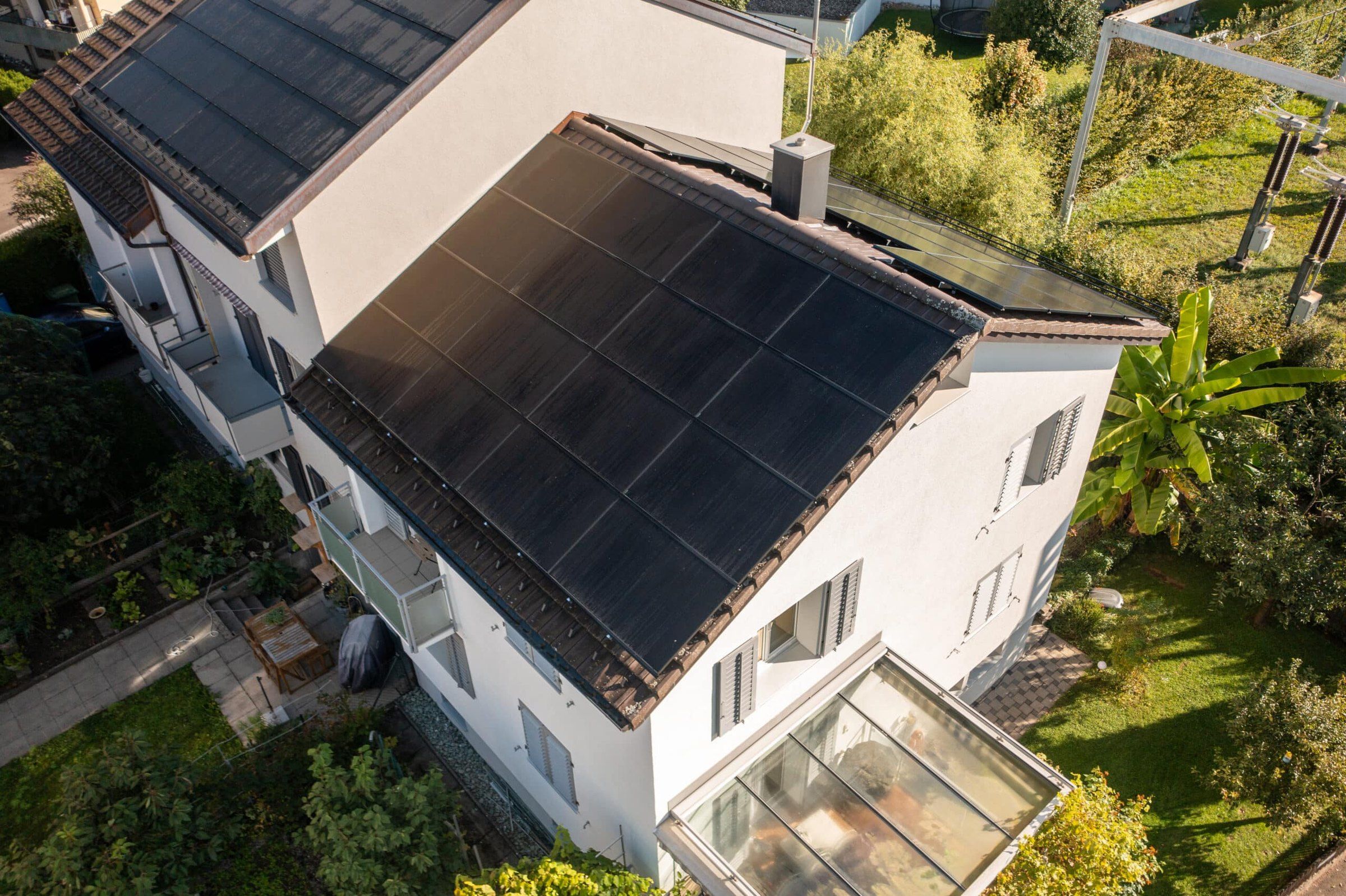
With your own system, you generate electricity where you need it. There are three ways in which this electricity shows up in your bill:
- Self-consumption: you use the electricity directly. You save the full grid electricity price including the grid fee.
- Feed-in: what you do not need flows into the grid. For this your utility pays the feed-in tariff. It is often between 6 and 15 ct. per kWh, and so much lower than the purchase price.
- Guarantees of origin: if you wish, you have your electricity certified and sell the certificates.
That is why, with your own roof, self-consumption counts most. A single-family home uses about 30 percent directly without further measures. With a battery storage system, a heat pump or an EV charger for the car, it is 60 to 70 percent.
What does it cost by comparison?
A green tariff never lowers your bill, it raises it slightly. A solar system is an investment that pays for itself over the years. For a typical 10 kWp system, expect CHF 24,000 to 30,000, less the one-off payment and tax deduction. You will find the full calculation with a table in the guide What does a solar system cost?
Impact matters too: a green tariff buys certificates for existing generation. A new system on your roof brings additional renewable generation to Switzerland. If impact matters to you, that is the stronger lever.
You can combine the two. In winter the system delivers less, and part of your annual demand stays with the utility. For this remaining electricity you can still choose a green tariff product.
Feed-in tariff and minimum payment
Your grid operator takes the electricity you do not use yourself. Since 2026, a statutory minimum payment based on the market price has applied to small systems. Beyond that, each utility sets its own tariff, and the differences are large. It is worth knowing your utility’s tariff before you size the system. The lower the tariff, the more each kWh you use yourself brings. We look it up for your address and calculate with it.
What does it mean for the environment?
A green tariff product shows where the electricity comes from on paper. It does not say whether a new system was built for it. Some utilities put part of the surcharge into a fund for new systems. That is good, but it remains the utility’s decision.
With your own solar system, you build new generation yourself. The electricity is produced on existing surfaces, with no new land and no long cables. There is also an advantage for the grid: what you use yourself at midday does not have to travel through the lines. And in summer, when the sun is strongest, your system is at its most productive.
Your system can also receive guarantees of origin. Pronovo issues them for your electricity. With small systems the revenue is low and the effort rather small. For profitability, self-consumption counts for far more.
How big should the system be?
Many people think first of their own annual consumption. A household of four uses around 4,500 kWh a year without a heat pump and electric car. A roof often delivers much more. A 10 kWp system in the Swiss Plateau (Mittelland) generates around 10,000 kWh.
That does not mean you have to keep the roof small. The surplus flows into the grid and is paid for. More important is the question of what you will connect in the coming years: heat pump, electric car, battery. We plan the system so that this is possible later without rebuilding, more on the solar system page.
What to do in winter?
In winter a solar system delivers less electricity because the days are short. Part of your electricity demand then comes from the utility. That is normal and cannot be avoided. Two things help: east-west roofs and steep façade modules deliver comparatively more in winter, and a battery shifts electricity from the day to the evening.
For the electricity you buy from the utility in winter, it is worth looking at the tariff offer. Many utilities offer green or nature power at fair prices too. That way you combine the best of both worlds: in summer you largely supply yourself, and in winter you draw electricity from Swiss hydropower.
Solar power without your own roof: ZEV and LEG
Not everyone has a roof. But tenants and owners in apartment buildings can also use solar power:
- In a self-consumption community (ZEV), all parties in the building use the electricity from the system on the roof. The electricity is billed internally. We plan metering, contracts and billing, more under ZEV.
- A local electricity community (LEG) makes it possible to share solar power across property boundaries within the same grid area. Whether this suits your neighbourhood depends on the grid operator.
The owner or property management has to decide. As a tenant, you can raise the subject.
An example to put this in perspective: at 4,500 kWh consumption and a 3 ct. surcharge, a nature power product costs about CHF 135 a year more. That money is gone, and nothing remains on the house in return. A system, by contrast, stands on your roof for 25 to 30 years and produces year after year. The surcharge is only an example, and your utility sets it itself.
What suits whom?
- Homeowners with a suitable roof: your own system. It is cheaper and more direct than any tariff. A green tariff product for the remaining electricity in winter is a supplement.
- Owners of apartment buildings: a system with a ZEV. The solar power stays in the building, which makes the investment more economical.
- Tenants with no influence over the roof: a green or nature power product from the utility, or suggest a ZEV to the landlord.
We calculate it for your roof
Whether solar power from your own roof pays off for you depends on your roof, your consumption and your utility’s tariff. We come by, check the roof and electrical installation and calculate with your figures. The site visit is free. Afterwards you receive a binding quote within 72 hours for your solar system, with yield forecast, subsidies and payback.
The free site visit
One appointment at your home. Then you know everything.
A project manager from our team visits you and checks three things. No sales show, no obligation. Afterwards you receive a binding quote with yield, subsidies and payback.
 01
01Roof
Area, orientation, pitch, condition of the roof covering and shading.
 02
02Electrical system
Grid connection, distribution board and space for inverter and battery.
 03
03Your consumption
Electricity bill, car, heating, plans. From this we calculate yield and subsidies.
How your project runs
Request
Tell us briefly about your building and your goal. Online or by phone.
Site visit
We check your roof, electrical system and consumption at your home. Free of charge.
Quote in 72 hours
Binding and transparent, with yield, subsidies and payback.
Permit and subsidies
We handle the notification procedure, the grid operator and Pronovo.
Installation and commissioning
Our own installers, a fixed date, final inspection with you on the roof.
Step 1 takes one minute. We take care of the rest.
Frequently asked questions
Before you get in touch.
Is the site visit really free?
Yes. The visit and the quote cost you nothing and commit you to nothing. You only decide once you hold the binding quote in your hands.
Is green electricity from the socket really solar power?
No. The electricity in the grid is always a mix. With green tariff products, the utility buys guarantees of origin for renewable generation. Physically, the same electricity flows as for everyone else. Solar power from your own roof, by contrast, comes straight into your house.
How much more does nature power cost than standard electricity?
Your utility sets that. A surcharge of a few centimes per kWh is usual, depending on quality and origin. At 4,500 kWh a year, that quickly adds up to a few dozen up to over a hundred francs.
What is a guarantee of origin?
A certificate that proves the type and origin of the electricity for every kWh produced. It is traded separately from the physical electricity. System operators can have guarantees of origin issued for their electricity and sell them.
How much solar power can I use myself?
Without a battery or loads that respond to the sun, it is usually about 30 percent in a single-family home. With a battery, heat pump or electric car, the share can rise to 60 to 70 percent.
As a tenant, do I need my own system to use solar power?
No. If the landlord builds a system, you can share in it through a self-consumption community (ZEV) or a local electricity community (LEG). The owner decides.
Who buys my surplus solar power?
Your grid operator is obliged to take it and pay for it. It sets the amount, and since 2026 there has been a statutory minimum payment for small systems. We check your utility's tariff in the quote.
Is it worth having my solar power certified?
That depends on the revenue. With small systems, self-consumption is usually far more important than selling guarantees of origin.
Which regions do you cover?
All of German-speaking Switzerland. We build most often in the cantons of Zurich, St. Gallen, Schwyz and Aargau. Our locations are in Zumikon ZH and Lachen SZ.
On to the service
Solar installation and what goes with it

The first step
We come to you. Free of charge.
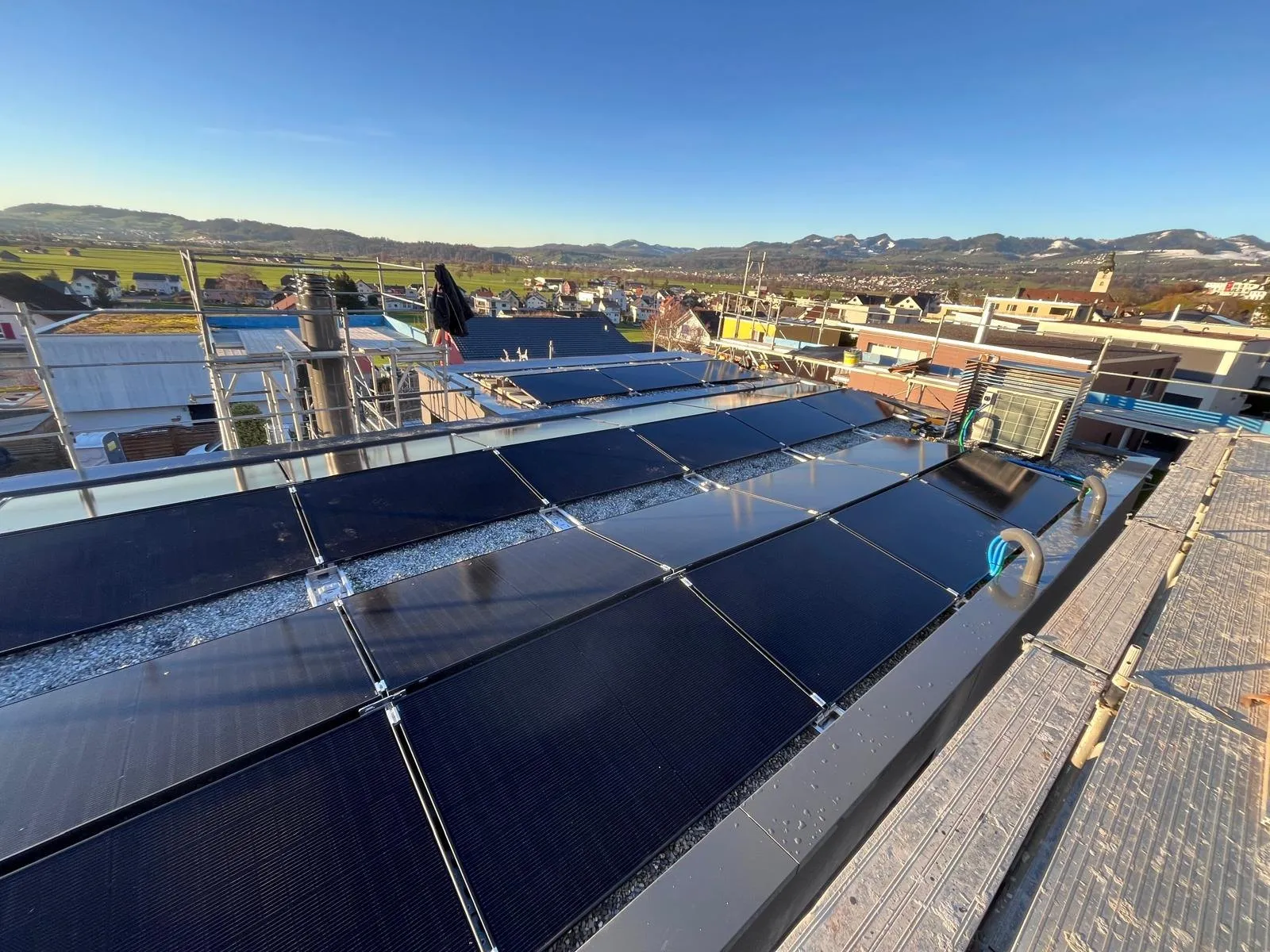
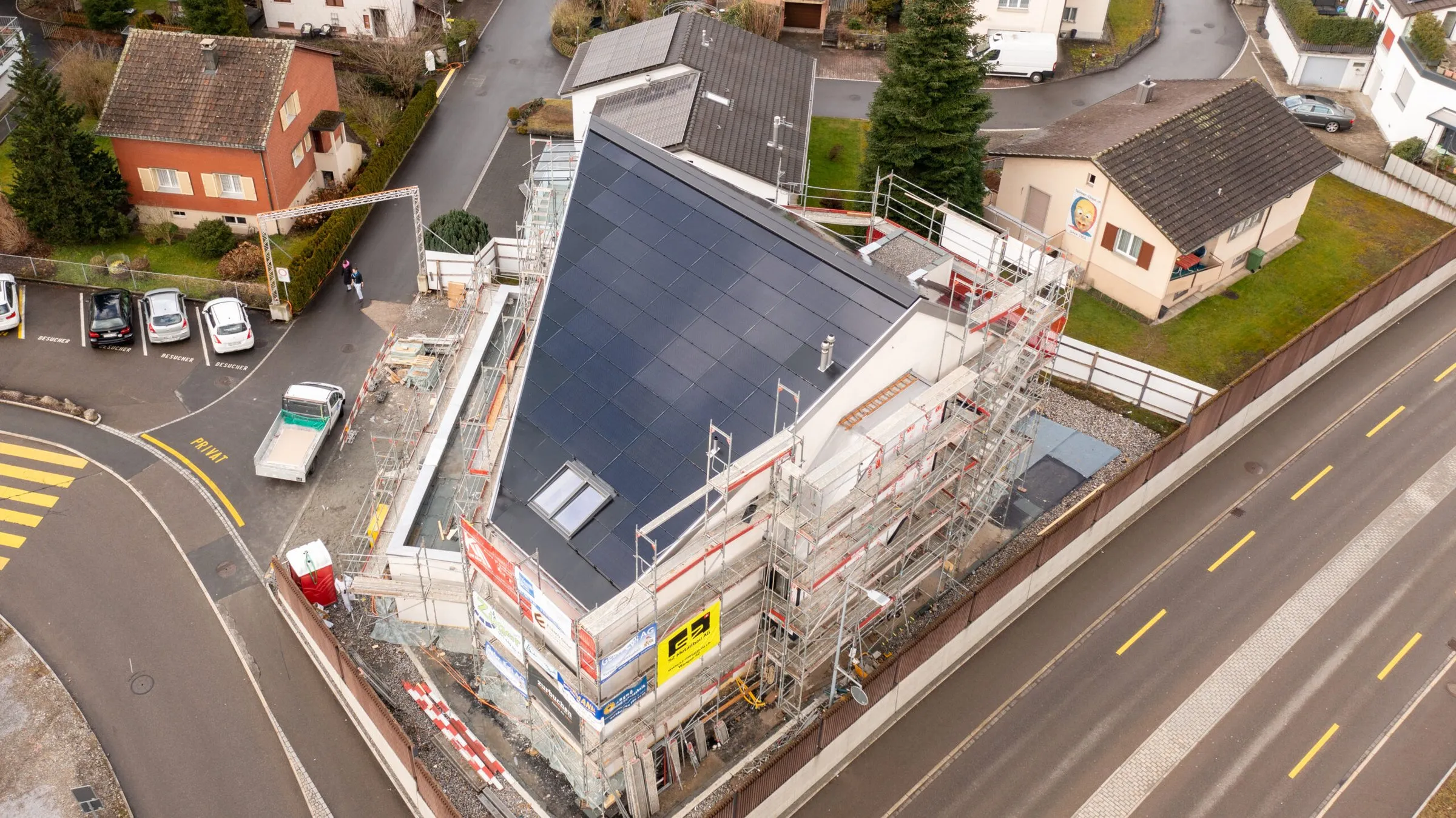
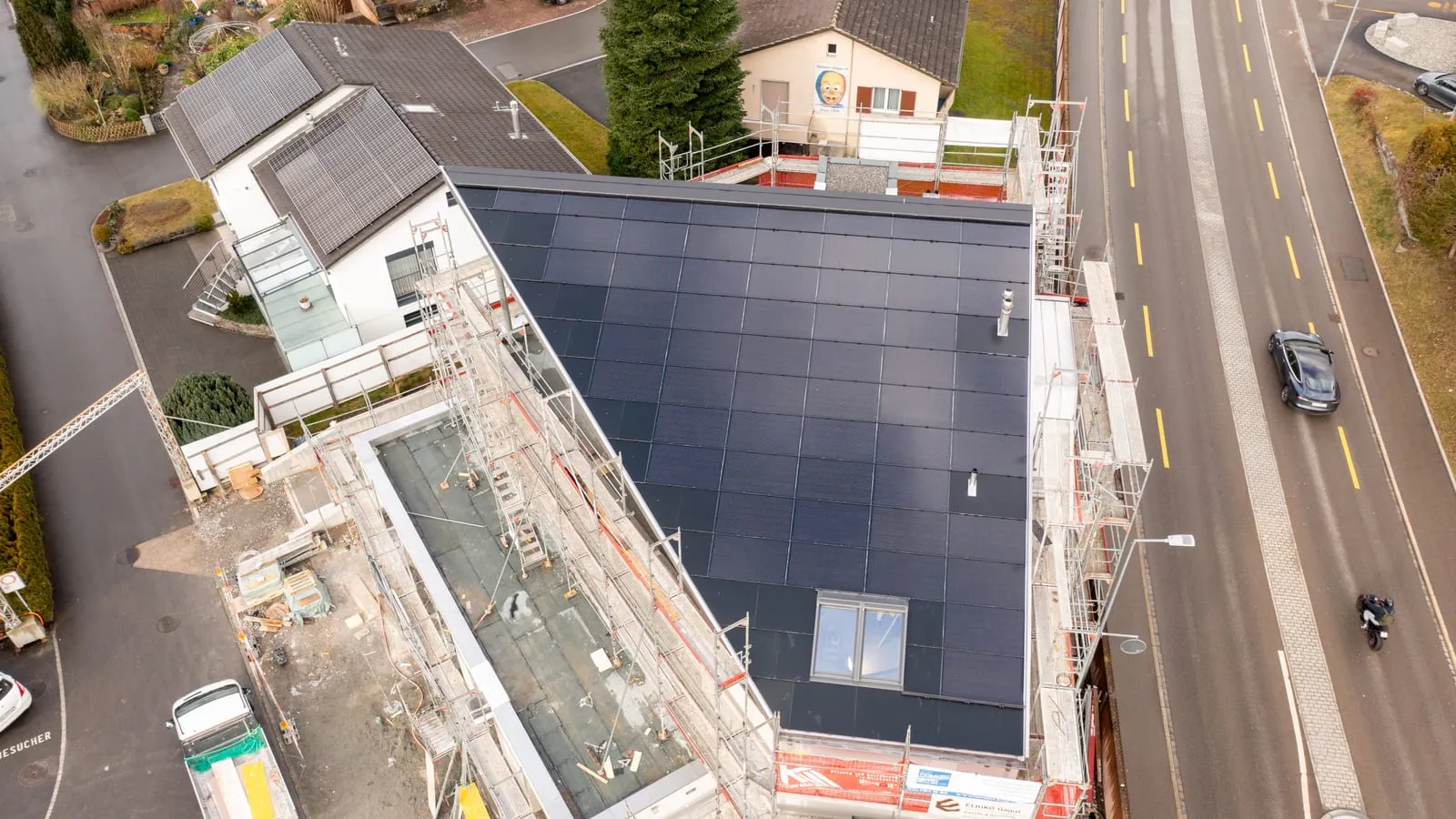
We check your roof, electrical system and consumption. Afterwards you know what is possible on your roof, what it costs and which subsidies you receive. The binding quote follows within 72 hours.
- Free and with no obligation
- Quote within 72 hours
- Subsidies pre-financed on request
