Guide: solar systems
In-roof or on-roof?Pros and cons.
On-roof is cheaper, in-roof looks calmer and is often the better choice when you renew the roof. We compare cost, yield, watertightness, subsidies and permits.
- Site visit: free and with no obligation
- Binding quote within 72 hours
- Subsidies pre-financed on request
Prefer to talk?044 980 08 80
Request a free site visit
Takes 1 minute. No obligation.
- Building
- Location
- Contact
Thank you. We have your request.
We will call you within one working day to arrange the appointment.
Add details Optional
Prefer to talk now? 044 980 08 80
Guide · Updated October 2026
In-roof or on-roof compared
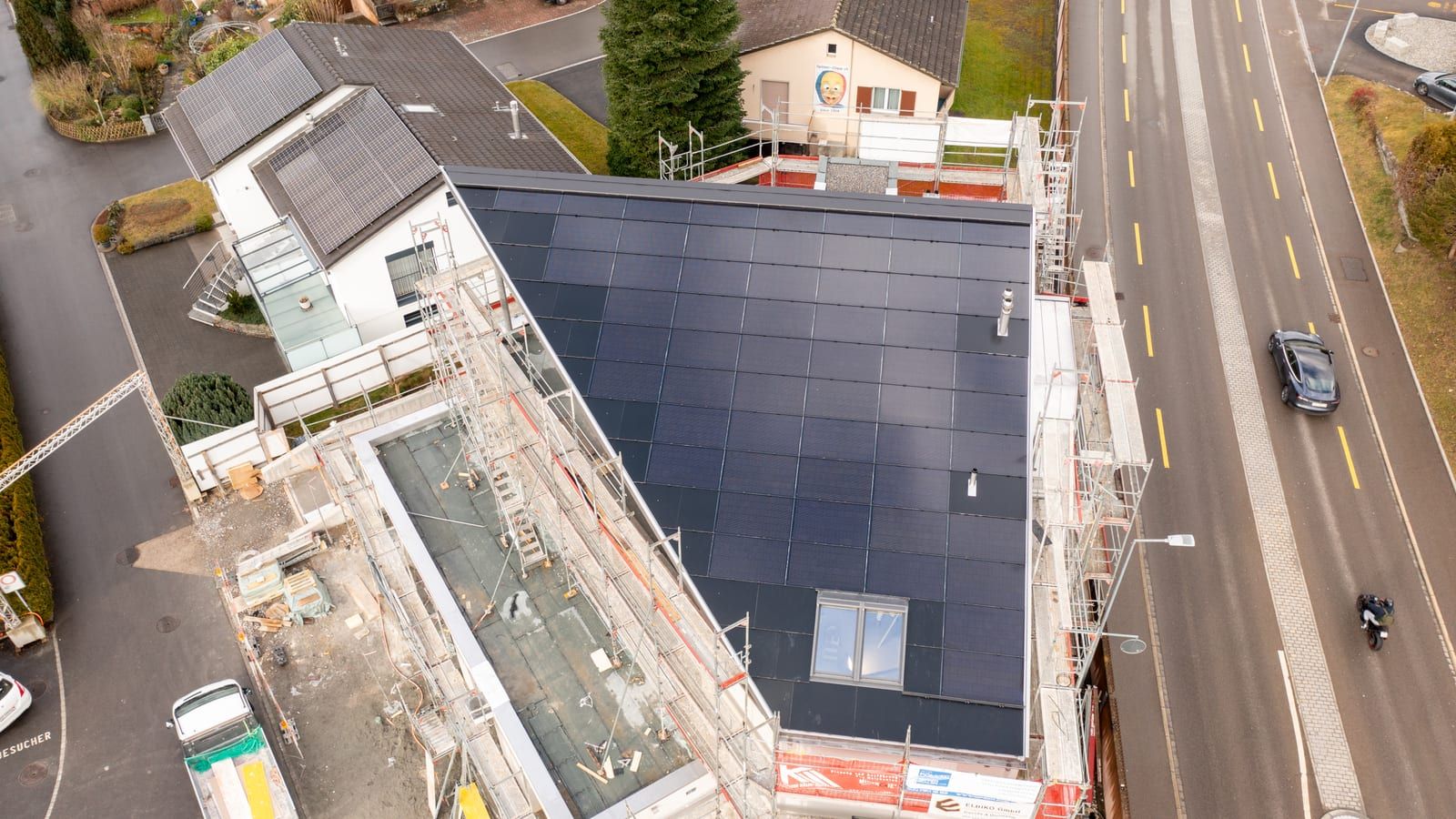
For a solar system on a pitched roof there are two ways to build. With on-roof, the modules sit on a substructure above the tiles. With in-roof, they replace the tiles and form the roof skin themselves. Both generate electricity from the same sunlight. Which system pays off depends mainly on the condition of your roof. If it is in good condition, on-roof is usually cheaper. If a new build or a roof renovation is coming up, it is worth comparing with in-roof.
Basics of the system are on the page in-roof solar system. The cost of an on-roof system is explained in the guide What does a solar system cost?.
The difference in brief
| On-roof | In-roof | |
|---|---|---|
| Build | modules on substructure above the tiles | modules replace the tiles |
| Look | modules stand slightly above the roof | flush, calm surface |
| Suited to | existing roof in good condition | new build, roof renovation |
| Cost per kWp | lower | higher, but tile costs drop out |
| Ventilation | good | poorer, slightly lower yield |
| One-off payment under 30 kWp | CHF 360 per kWp | CHF 400 per kWp |
| Installation | quick | coordinated with roofer and plumber |
Cost: when does in-roof pay off?
Per kWp, in-roof costs more than on-roof. The systems are more complex and the connections need sheet-metal work. A blanket price would be unreliable, because prices differ widely by system and roof. For on-roof, the guide values from the cost guide apply: CHF 24,000 to 30,000 for 10 kWp, CHF 33,000 to 42,000 for 15 kWp, each before subsidies.
It depends on what you are paying for anyway. For a new build or a roof renovation you need a new roof skin. Under the modules, the tiles and part of the roofer’s work drop out. The extra cost compared with a tiled roof is therefore what counts, and the full system price is the wrong yardstick. For a roof in good condition, this argument falls away. Then on-roof remains the more economical solution.
New build and roof renovation: the right moment
With a new build, the roof is not yet covered. Modules, roof build-up and electrical planning can be coordinated from the start, and some scaffolding and interfaces drop out. In a renovation, insulation and underlay can be renewed in the same step. It is important that architect, roofer, plumber and we plan together early. Changes are more costly with in-roof than with on-roof, because the modules are part of the roof skin.
Look: why in-roof appears calmer
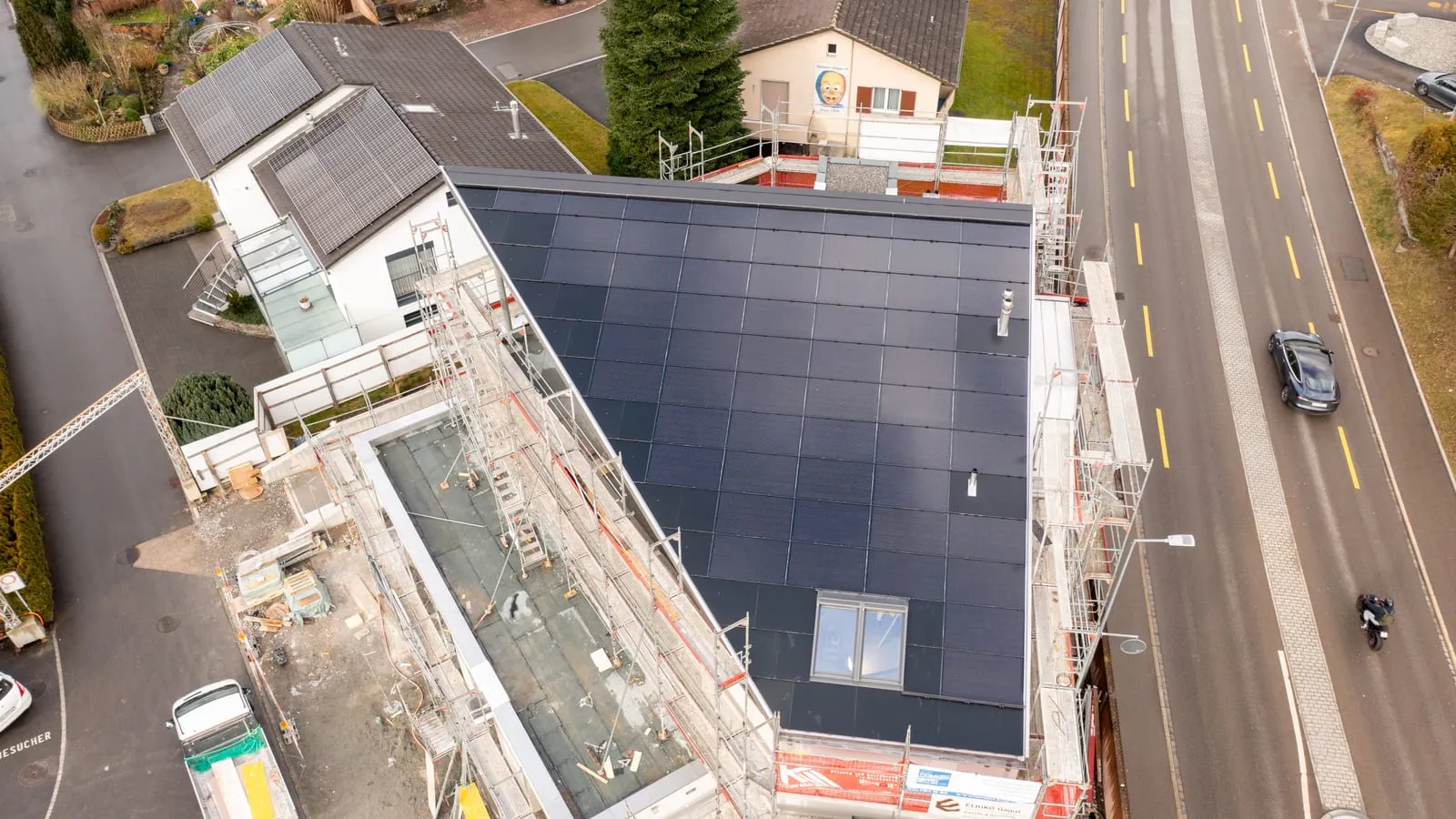
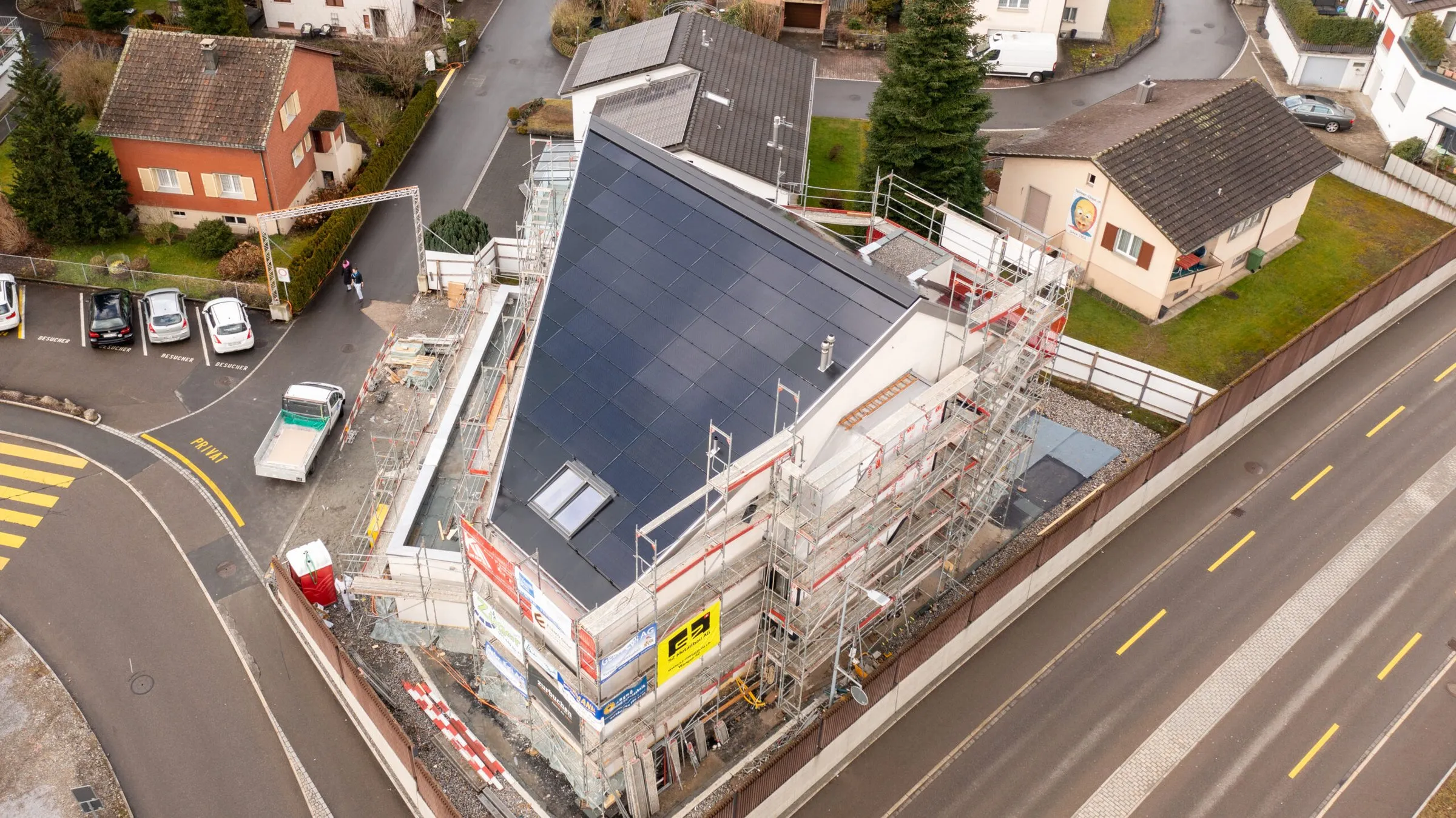
In-roof modules lie in the plane of the roof. This gives a uniform surface without rails and gaps. With on-roof, the modules visibly stand above the tiles. If appearance matters to you, for example in a new build, in a historic core zone or in a house in a protected townscape, in-roof is often the better solution. Roof areas without modules are still covered with tiles, and we match the colour of modules and tiles.
For a protected building, solar tiles are also an option. These are small solar elements in tile form. They usually cost much more per watt than large-format in-roof modules.
Yield: ventilation makes the difference
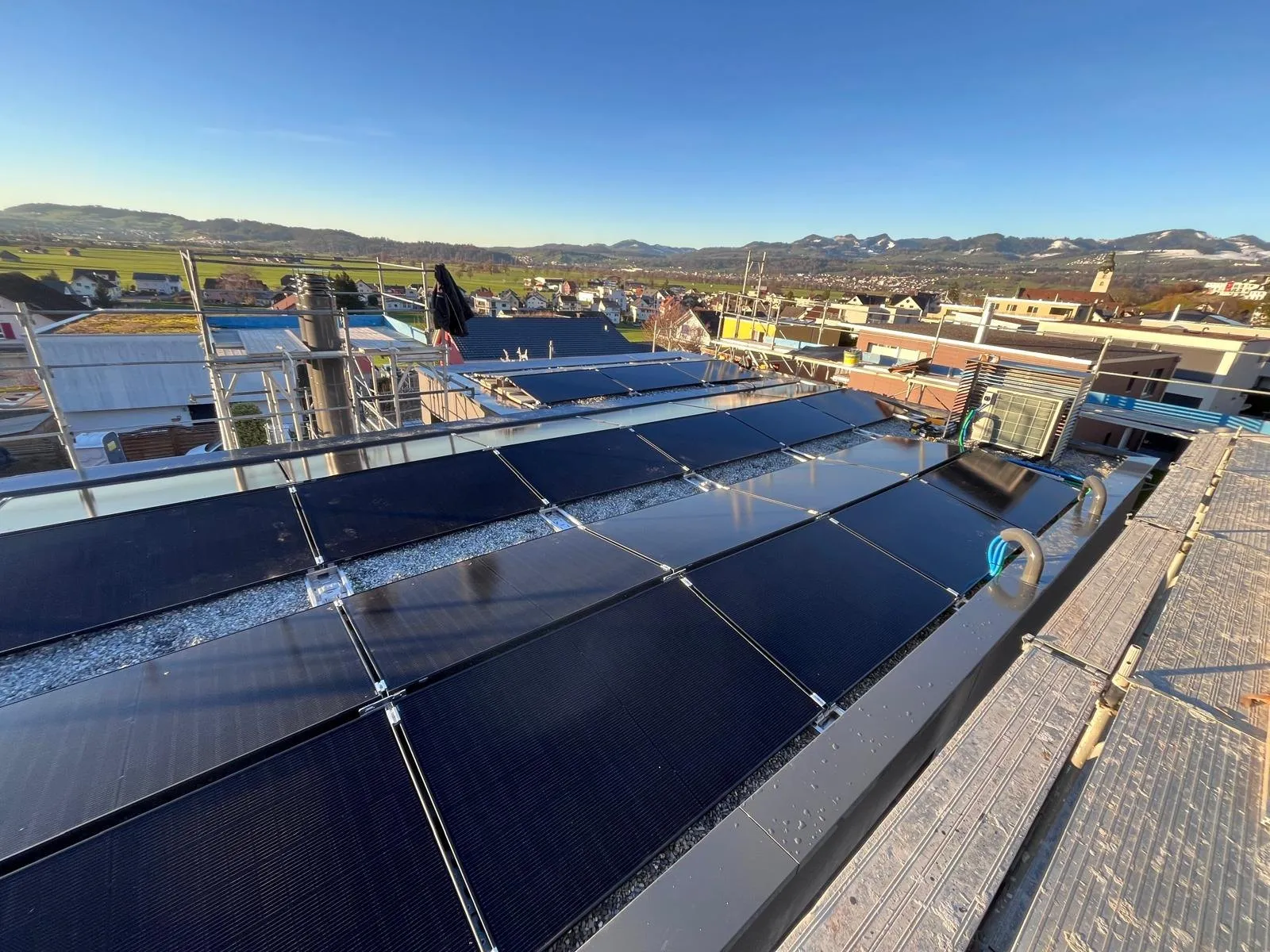
Modules deliver slightly less electricity when warm. With on-roof, air flows under the modules and cools them. With in-roof, ventilation is poorer, the modules run warmer and deliver a little less. Good systems include an air channel under the modules. Then the loss stays small.
Orientation, tilt and shading have a bigger effect than the system. A south roof with on-roof gives more than a west roof with in-roof. With in-roof you also cannot place the modules freely, because they lie where the roof surface is. In the quote we show you the yield forecast for both options.
Watertightness and fire protection
The most important question with in-roof is watertightness. An in-roof system is watertight when three things are right: the system is tested and approved for the roof pitch, the connections at eaves, ridge, chimney and roof windows are executed cleanly, and there is an underlay membrane under the modules that drains water away. Very flat roofs are not suitable for in-roof.
The roof skin must also meet the cantonal fire protection rules. For solar systems, the fire protection information sheet of the VKF (Association of Cantonal Fire Insurers) applies. We choose only systems that are tested for this. We plan with the roofer and plumber so that system and roof form one whole. With on-roof, the existing roof skin stays unchanged, and watertightness depends on the fixings there.
Subsidies: in-roof brings a higher one-off payment
For systems under 30 kWp, Pronovo has paid no base amount since 1 April 2025. The payment is CHF 360 per kWp for attached and CHF 400 per kWp for integrated systems (EnFV Annex 2.1). For 10 kWp that is CHF 3,600 against CHF 4,000. A system counts as integrated if, besides generating electricity, it takes on a second function of the building envelope, which for in-roof is weather protection.
The CHF 400 difference does not cover the extra cost of in-roof. It does improve the calculation. Cantons and communes partly pay more on top. We register the system and submit the application. On request, we pre-finance the subsidy. More in the guide Subsidies for solar systems.
Permits
On roofs, suitably adapted solar systems need a notification, not a building permit (Art. 18a RPG). This applies to on-roof and in-roof. For cultural monuments a building permit is always required. In historic core zones and protected townscapes, the commune decides case by case, and a flush, uniform in-roof system often has better chances there than a visible substructure. We clarify this for your address and submit the documents. More on the procedure in the guide Solar system permits.
Which system when?
- On-roof suits you if the roof is in good condition, budget comes first and no special requirements apply to the look.
- In-roof suits a new build or roof renovation, high expectations of the look and a sensitive setting.
- Flat roof: Here a raised system is the solution, see Solar system on a flat roof.
For the electricity itself, the system makes no difference. With a battery storage unit and an EV charger you use more of it in your own home. The modules are described on the page PV modules.
We calculate it for your roof
On-roof or in-roof: the condition of the roof, its shape and your plans decide. We visit and check the roof, roof build-up and electrical system, the site visit is free. You then receive a binding quote within 72 hours, if you wish with both systems side by side, with yield, subsidies and payback.
The free site visit
One appointment at your home. Then you know everything.
A project manager from our team visits you and checks three things. No sales show, no obligation. Afterwards you receive a binding quote with yield, subsidies and payback.
 01
01Roof
Area, orientation, pitch, condition of the roof covering and shading.
 02
02Electrical system
Grid connection, distribution board and space for inverter and battery.
 03
03Your consumption
Electricity bill, car, heating, plans. From this we calculate yield and subsidies.
How your project runs
Request
Tell us briefly about your building and your goal. Online or by phone.
Site visit
We check your roof, electrical system and consumption at your home. Free of charge.
Quote in 72 hours
Binding and transparent, with yield, subsidies and payback.
Permit and subsidies
We handle the notification procedure, the grid operator and Pronovo.
Installation and commissioning
Our own installers, a fixed date, final inspection with you on the roof.
Step 1 takes one minute. We take care of the rest.
Frequently asked questions
Before you get in touch.
Is the site visit really free?
Yes. The visit and the quote cost you nothing and commit you to nothing. You only decide once you hold the binding quote in your hands.
Is in-roof more expensive than on-roof?
Per kWp, yes, because the systems are more complex. In return, tiles and part of the roofer's work drop out. If you are renewing the roof anyway, the difference is often much smaller. We calculate the comparison in the quote.
How watertight is an in-roof system in heavy rain?
Yes, if it is approved for the roof pitch and installed properly. The critical points are the connections at the eaves, ridge, chimney and roof windows. Under the modules there is an underlay membrane as a second safeguard.
Does in-roof give less yield?
Usually a little. In-roof modules are ventilated less well, run warmer and deliver slightly less electricity. With an air channel under the modules, the loss stays small when planned well.
Do I get more subsidy for in-roof?
Yes, from the federal one-off payment (Einmalvergütung). For systems under 30 kWp, Pronovo pays CHF 400 per kWp for integrated and CHF 360 per kWp for attached systems. For 10 kWp that is CHF 400 more.
Is in-roof worth it for an existing roof in good condition?
Usually not. Tiles that work fine would have to be removed. On-roof is the more economical solution in that case. In-roof pays off mainly for new builds and roof renovations.
Which system is more likely to get a permit in a historic core zone?
Often in-roof, because it looks calmer. The commune and, where relevant, heritage protection decide case by case. We clarify the situation for your address and submit the documents.
Which regions do you cover?
All of German-speaking Switzerland. We build most often in the cantons of Zurich, St. Gallen, Schwyz and Aargau. Our locations are in Zumikon ZH and Lachen SZ.
On to the service
In-roof solar and what goes with it

The first step
We come to you. Free of charge.
We check your roof, electrical system and consumption. Afterwards you know what is possible on your roof, what it costs and which subsidies you receive. The binding quote follows within 72 hours.
- Free and with no obligation
- Quote within 72 hours
- Subsidies pre-financed on request
